
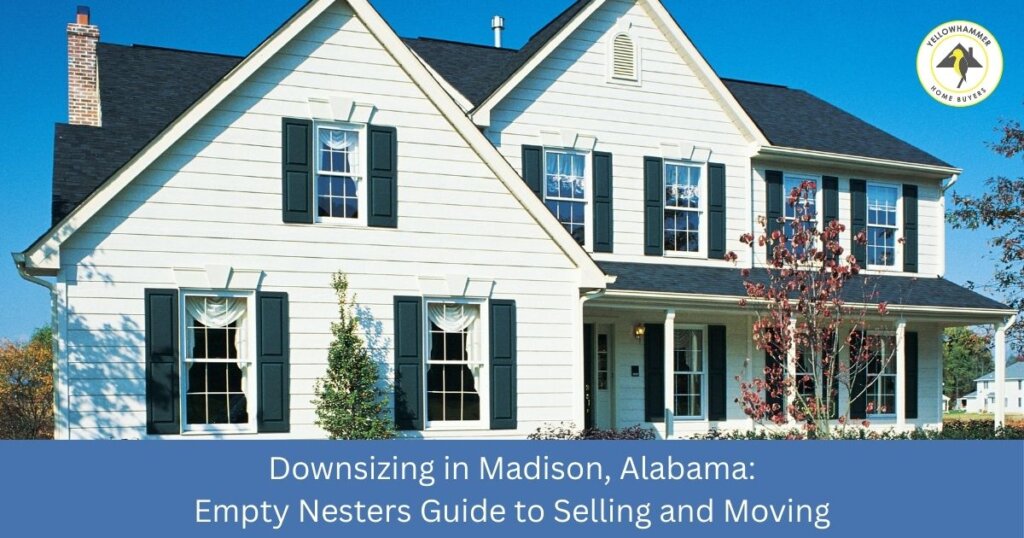
The house in Madison that was perfect for raising kids is now way too big for just the two of you. Four bedrooms when you only use one. A yard you’re tired of maintaining. Stairs that are getting harder to climb. Property taxes and utilities on 2,500 square feet when you live in maybe 800.
Your kids are grown and gone. Maybe you’re retired or close to it. You’re ready to downsize to something smaller, easier, more affordable. But you’ve lived here 25 or 30 years. You have decades of stuff. And you’re not sure where to even start.
I’m Brandon, and my partner David and I run Yellowhammer Home Buyers. We’ve helped dozens of empty nesters and retirees in Madison downsize from family homes they’ve lived in for decades. Let me walk you through when to downsize, how to actually do it, and the sell-first vs. buy-first question.
Why Downsizing Makes Sense After Kids Leave
Let’s talk about the real reasons people downsize beyond just “the kids moved out.”
The Financial Math Changes
When you bought this house 25 years ago, you needed:
- 3-4 bedrooms for kids
- Big yard for kids to play
- Good school district
- Family-friendly neighborhood
You stretched your budget because it was worth it for your family. Now:
Your current house costs:
- Mortgage: $1,800/month (or paid off)
- Property taxes: $3,000-$4,500/year
- Insurance: $1,500-$2,000/year
- Utilities: $300-$400/month
- Maintenance: $300-$500/month
- Lawn care: $150-$200/month
Total annual cost: $20,000-$30,000/year
A smaller place:
- No mortgage (or smaller)
- Property taxes: $1,500-$2,500/year
- Insurance: $800-$1,200/year
- Utilities: $150-$200/month
- Maintenance: $100-$200/month
- Minimal yard work
Total annual cost: $8,000-$15,000/year
You’re saving $10,000-$15,000 per year by downsizing. Over 20 years of retirement, that’s $200,000-$300,000.
The Maintenance Burden Gets Heavier
At 55 or 65, home maintenance that used to be manageable is now:
- Climbing ladders to clean gutters (dangerous)
- Mowing a big yard (exhausting)
- Shoveling snow (risky)
- Climbing stairs multiple times a day (harder every year)
- Keeping up with repairs (overwhelming)
You’re spending weekends maintaining a house instead of enjoying retirement.
You’re Heating/Cooling/Cleaning Empty Rooms
You live in the master bedroom, kitchen, and living room. The other three bedrooms are closed off. You’re paying to heat, cool, and maintain 1,500 square feet you don’t use.
You Have Equity to Use for Retirement
If you’ve lived in Madison 25+ years, your house has significant equity. Maybe $100,000, maybe $200,000. That equity could:
- Fund retirement
- Supplement fixed income
- Pay for healthcare costs
- Help grandkids with college
- Provide peace of mind
But it’s locked in your house, not working for you.
When Is the Right Time to Downsize?
Most people wait too long. Here’s how to know it’s time:
Before Health Forces You
Don’t wait until stairs become impossible or you have a medical event. Downsize while you’re healthy enough to make the move on your terms, not in a crisis.
Warning signs it’s time:
- Stairs are difficult
- Yard work is exhausting
- House maintenance is overwhelming
- You’re avoiding home repairs because they’re too much
Before Your House Needs Major Updates
Your Madison house is probably 20-30+ years old. It needs:
- New HVAC ($8,000-$15,000)
- New roof ($12,000-$18,000)
- Kitchen updates ($15,000-$30,000)
- Bathroom updates ($8,000-$15,000)
If you wait until these repairs are needed, you either:
- Spend $50,000+ updating a house you’re leaving
- Sell it needing work (lower price)
Better timing: Downsize before major systems fail.
While Market Conditions Are Good
Madison real estate has been strong. If you wait 5-10 years, who knows? Downsize while values are good and you can maximize your equity.
When Your Spouse Is On Board
Downsizing is emotional. Both spouses need to agree it’s time. Don’t push if one isn’t ready, but don’t let one hold both of you back from a better situation either.
The Decluttering Challenge: 30 Years of Stuff
This is what stops most people. You’ve accumulated 30 years of belongings. The thought of sorting through it all is paralyzing.
What You’re Dealing With
Kid stuff: Old toys, school projects, trophies, yearbooks
Furniture: Every piece you’ve collected over 30 years
Kitchen: Multiple sets of dishes, gadgets, appliances
Garage: Tools, holiday decorations, stuff you forgot you had
Basement/Attic: Boxes you haven’t opened in 10+ years
Sentimental items: Photos, letters, mementos
The Decluttering Process That Actually Works
Month 1: Easy Decisions
- Start with clearly unwanted items
- Donate, trash, recycle
- Don’t start with sentimental stuff (that’s overwhelming)
Month 2: Category by Category
- Kitchen: Keep what you use. Donate duplicate sets.
- Clothes: If you haven’t worn it in 2 years, donate it.
- Garage: Trash broken tools, donate working ones you don’t use.
Month 3: Sentimental Items
- Photos: Scan or keep favorites, let go of duplicates
- Kid stuff: Each child gets one box, rest goes
- Inherited items: Keep what you truly love, let go of guilt
The Rule: If you haven’t used it or looked at it in 5 years, you don’t need it.
What Kids Actually Want
Reality check: Your kids don’t want most of your stuff.
They might want:
- Some family photos
- One or two sentimental items
- Maybe one piece of furniture
They don’t want:
- Your china set
- Your furniture
- Boxes of their childhood stuff
- Knick-knacks and decorations
Ask them directly what they want. Don’t assume they’ll take everything. And don’t let guilt about “family heirlooms” keep you in a house that’s too big.
Sell First or Buy First?
This is the big question for downsizers. Let me explain the pros and cons:
Option 1: Sell First, Then Buy
How it works:
- List your current house
- Move to temporary housing
- Shop for smaller place with cash in hand
- Buy exactly what you want
Pros:
- Know exactly how much money you have
- Shop without pressure
- No risk of carrying two mortgages
- Strongest negotiating position as cash buyer
Cons:
- Temporary housing for 2-4 months (inconvenient)
- Moving twice (exhausting)
- Storage costs for belongings
- Rent costs while shopping
Best for: People who can handle temporary disruption and want financial certainty
Option 2: Buy First, Then Sell
How it works:
- Find your new place
- Buy it (using savings or bridge loan)
- Move once
- List old house while living in new one
Pros:
- Only move once
- No temporary housing
- Take your time finding the perfect place
- House shows better when empty
Cons:
- Carrying two properties (risky and expensive)
- Might need bridge loan (complex and expensive)
- Pressure to sell fast if money is tight
- What if old house doesn’t sell quickly?
Best for: People with significant savings or guaranteed pensions who can afford overlap
Option 3: Sell to Us, Close on Your Timeline
How it works:
- Get cash offer from us
- Find your new place (30-90 days)
- Close on both same week
- Move once from old to new
Pros:
- Guaranteed buyer waiting
- Know your exact proceeds
- Shop without pressure
- Close when you’re ready
- Move once
Cons:
- Lower offer than retail (but no commission either)
Best for: People who want certainty and convenience over maximum price
The Emotional Side of Downsizing
Let’s acknowledge this isn’t just about square footage. This is hard emotionally.
Leaving the Family Home
You raised your kids here. You have 30 years of memories in every room. Your kids’ heights marked on the doorframe. The kitchen where you cooked thousands of meals. The living room where you opened Christmas presents.
Walking away from that is emotional. It feels like closing a chapter.
The reframe: You’re not abandoning memories. You’re carrying them with you. The house is just the setting. Your family is the story, and that continues wherever you go.
Feeling Like You’re “Giving Up”
Society acts like bigger houses are success and downsizing is failure. That’s nonsense.
Downsizing is smart. You’re choosing:
- Financial freedom
- Less stress
- More time
- Better quality of life
That’s not giving up. That’s winning at the next phase of life.
Guilt About “Wasting” Space You Paid For
You raised kids here. You worked hard to afford this house. Leaving it feels wasteful.
The reality: The house served its purpose. It was worth it then. But that phase is over. Clinging to it now is the waste – wasting your time, money, and energy maintaining something you don’t need.
Downsizing Options in Madison
Here’s what downsizers typically move to in Madison:
Smaller Single-Family Home
Size: 1,200-1,500 sq ft
Beds: 2-3
Price: $180,000-$250,000
Pros: Still your own house and yard, just smaller
Cons: Still maintaining a house and yard (less than before, but still work)
Ranch/One-Story
Why retirees love them: No stairs. Everything on one level.
Madison options: Plenty of 1970s-1990s ranches available
Townhouse/Condo
Size: 1,200-1,600 sq ft
Price: $150,000-$220,000
Pros:
- HOA handles exterior maintenance, lawn care
- Often includes pool, clubhouse amenities
- Lock-and-leave for travel
Cons:
- HOA fees ($150-$300/month)
- Less privacy
- Rules about modifications
55+ Community
Madison options: Limited, but some in surrounding areas
Pros:
- Age-appropriate amenities
- Social activities
- Low maintenance
Cons:
- Age restrictions (no grandkids staying long-term)
- HOA rules
How We Help Madison Downsizers
Here’s how we work with empty nesters:
Step 1: Honest Conversation
Call (256) 795-3014 or contact us online. Tell us:
- How long you’ve lived there
- Why you’re downsizing
- Your timeline
- What you’re looking for next
Step 2: Fair Cash Offer
We make you an offer that factors in:
- Current market value
- Condition as-is
- Your timeline
- Our costs and profit
You know exactly what you’re netting, so you can shop for your next place with certainty.
Step 3: Flexible Closing
Need 30 days to find a place? No problem.
Need 60 days? We’ll wait.
Found your place and need to close fast? We can do that too.
You control the timeline.
Step 4: We Can Help With Cleanout
Have a garage full of stuff your kids don’t want? We can connect you with junk removal services or handle it ourselves after closing.
You don’t have to sort through 30 years of accumulated belongings if you don’t want to.
FAQ: Downsizing in Madison
Q: Should I downsize before or after retirement?
A: Before is usually better. Downsize while you’re healthy, have income, and can handle the move.
Q: What if I’m not ready emotionally?
A: Don’t force it. But also don’t let fear of change keep you in a situation that’s becoming a burden.
Q: Should I renovate before downsizing?
A: No. Don’t spend $50,000 updating a house you’re leaving. Sell as-is or with minimal updates.
Q: How much do I need to declutter?
A: If moving from 2,500 sq ft to 1,200 sq ft, plan to get rid of 50-60% of your belongings.
Q: What if my spouse isn’t ready?
A: Have honest conversations. Sometimes one spouse needs more time. Sometimes one is holding both back from a better situation.
Q: Can we afford to downsize?
A: Usually yes. If you have significant equity, you can buy smaller for cash and live mortgage-free.
The Bottom Line
Downsizing in Madison isn’t about losing your family home. It’s about gaining financial freedom, less stress, and more time to enjoy retirement.
The house served its purpose raising your family. Now it’s time for the next chapter.
Ready to downsize your Madison home? Contact us or call (256) 795-3014 to discuss your options.